
- Since 2016Local Charlotte buyer since 2016Local Charlotte buyer since 2016
- Any conditionWe Buy Cars In Any ConditionWe Buy Cars In Any Condition
- 1,000s boughtThousands of Vehicles PurchasedThousands of Vehicles Purchased
- Cash on pickupCash Paid On PickupCash Paid On Pickup
- Free towingFree Same-Day TowingFree Same-Day Towing
- Charlotte metroCharlotte, Mecklenburg & Surrounding AreasCharlotte, Mecklenburg & Surrounding Areas
Cash For Fire Damaged Cars In Charlotte
We buy fire-damaged cars in the Charlotte area, from partial engine fires to total burns. Free tow truck pickup is included with every purchase.
Get your free cash offer
- Engine-bay fire to full burn-down — all welcome
- Wiring harness damage, melted modules, smoke-saturated interior — none of it changes the sale
- NC salvage or fire-branded title — we know the paperwork
- Free tow truck from driveway, garage, or tow yard
What happens after you submit
- 1We price your exact vehicle
Year, make, model, condition and title status are checked against current scrap and salvage numbers.
- 2A local buyer calls you
You get a real number from a Charlotte dispatcher — not an automated range.
- 3We schedule the tow
Towing is included. Pickups run Monday–Saturday; no Sunday pickups.
- 4You get paid at the curb
Cash, Zelle, or Apple Pay when the paperwork is signed.
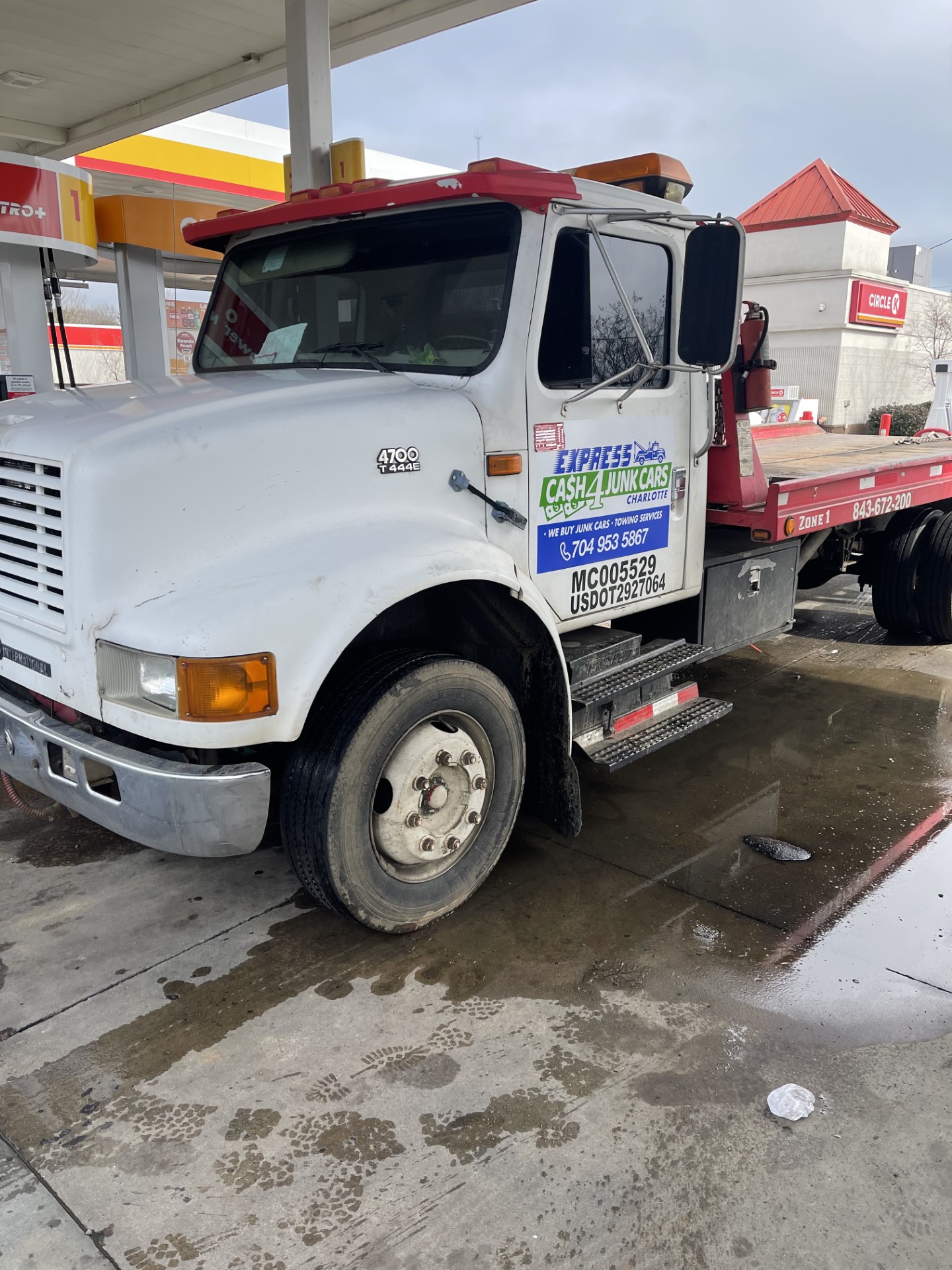
Why many owners decide not to repair fire damage
Vehicle fires are fundamentally a wiring, fuel, and electrical event, not an impact event. The fire damage profile depends entirely on origin and containment. An engine-bay electrical fire that started at a chafed wiring harness behind the alternator and was extinguished within 60 seconds destroys the harness, the intake manifold, the throttle body, the under-hood fuse box, the engine wiring loom, and often the windshield from the heat — but leaves the cabin, drivetrain, body panels behind the firewall, and rear of the vehicle intact. A cabin electrical fire that started at the HVAC blower motor and burned through the dash destroys the instrument cluster, every dash module, the wiring behind the dash, the HVAC system, and the front seats from smoke — but leaves the engine, transmission, and rear of the vehicle intact. A garage fire that consumed the vehicle from the outside burns paint and trim, melts glass, damages every rubber and plastic component, and often destroys the vehicle as a whole. A post-collision fuel-line fire combines collision damage with fire damage and almost always results in insurance total-loss declaration. This page is specifically about that range of fire scenarios — wiring fires, fuel fires, electrical fires, garage fires, total burns — not about generic damaged-vehicle conversations.
The North Carolina salvage and fire-branded title framework is the paperwork layer. Vehicles declared total losses by insurance for fire damage typically have their titles branded by NCDMV as 'Salvage' under G.S. 20-71.3, with the cause of damage noted on the brand record. Some states use specific 'Fire Damage' brands; NC generally uses the broader 'Salvage' or 'Junk' brands with damage cause documented. A fire-branded or salvage-branded title cannot be retitled clean and the vehicle cannot be registered for road use without a salvage rebuild inspection (which most fire vehicles cannot meaningfully pass because of the wiring damage). If the owner retained the salvage at insurance settlement, the brand is on the title and the vehicle is yours to sell. If the insurance company kept the salvage, the vehicle moved to an insurance auction queue and we sometimes buy at that stage with auction authorization.
Repair quotes on fire-damaged vehicles in the Charlotte market follow the predictable pattern of any wiring-and-electronics failure. Engine-bay wiring harness replacement: $2,500-$6,000 for the affected sections (full harness on most modern vehicles runs higher). Interior replacement after smoke or partial cabin fire: $2,000-$5,000 for seats, carpet, headliner, and dash components. Mechanical systems exposed to heat or melted components: $1,500-$3,500 for starter, alternator, fuel pump, sensors, hoses, belts, and any module that warped or melted. Body and paint work for fire-scorched panels: $500-$2,000 per panel, more if structure is heat-affected. When these stack on a partial fire — which they always do because fire damages every system in the affected zone — the combined quote exceeds the vehicle's pre-fire value before any work starts. On total burns, the conversation is scrap-plus-component-salvage, not repair.
We run fire-damaged car buying pickups across the Charlotte metro every week. Most of our volume comes out of Charlotte, Concord, Gastonia, Huntersville, and Matthews — but we buy across 20+ other cities in the area too. Ready to move? Get a cash offer for your junk car or check what your car is worth on our junk car value guide.
Owners who land on this page often also need flood-damaged car buying, wrecked car buying, damaged car buying, junk car removal, car with mechanical problems, or missing catalytic converter car buying — same tow truck, same crew, same cash-on-pickup pay. If you're not sure which one actually describes your situation, start with our our Charlotte service page and we'll sort it out on the call.
When fire damage costs more than the vehicle is worth
Engine-bay fire damaged the wiring harness and components
The most common fire pattern we pick up in Charlotte. Under-hood fires from electrical shorts (alternator, starter, fusebox), fuel-line leaks, or coolant-line failures destroy the engine wiring loom, intake, throttle body, accessories, and often the windshield. Repair quotes start at $3,500-$6,000 and routinely exceed vehicle value.
Cabin electrical or HVAC fire with smoke damage
Dash fires, blower motor fires, and electrical short fires inside the cabin damage the dash, modules, wiring, HVAC, and front interior — even when the actual fire was small. The smoke smell alone makes the interior unrecoverable for normal use, and the electrical system needs full diagnosis or replacement throughout.
Garage fire that consumed or partially consumed the vehicle
Garage fires usually start outside the vehicle (electrical fault in the garage, stored materials, water heater) and consume the vehicle as part of broader property damage. Insurance handles these as total losses in most cases. We buy the salvage and coordinate pickup with whatever access is available on the property — sometimes from a fire-damaged garage that needs partial demolition to reach the vehicle.
Post-collision fuel or fluid fire
Some collisions ignite fuel, brake fluid, transmission fluid, or coolant post-impact. The combination of collision damage and fire damage almost always pushes the vehicle into total-loss territory. We handle these from insurance salvage queues and direct from owners who kept the salvage at settlement.
Arson or suspicious-origin fire (post-investigation)
Arson cases typically sit in tow yards during fire-marshal investigation. Once the investigation closes and the vehicle is released for disposition, we coordinate pickup with the tow yard and the appropriate authorization (owner or insurance). We do not pick up vehicles still under active investigation hold.
Fire was extinguished but the vehicle won't start
Even contained fire damage often disables the vehicle permanently — melted connectors, warped modules, fried PCM, compromised fuel system, damaged sensors. The cost to make a fire-damaged vehicle start reliably rarely makes economic sense compared to selling for parts and scrap.
Recent fire-damaged car buying pickups in the Charlotte area
Problem: Engine-bay electrical fire at alternator harness
Reason for selling: Insurance total loss, owner retained salvage
Outcome: $350 cash from a single-family driveway, NC salvage title transferred
Problem: Under-hood fuel-leak fire
Reason for selling: Insurance settled, vehicle remained on owner's property
Outcome: $400 paid from a residential driveway
Problem: Garage fire, partial cabin burn
Reason for selling: Property cleanup after insurance settlement
Outcome: $325 cash from a fire-damaged garage with partial demo access
Problem: Post-collision fuel-line fire
Reason for selling: Tow yard pickup after fire-marshal investigation closed
Outcome: $575 paid from a Charlotte tow yard
Problem: Cabin electrical dash fire while parked
Reason for selling: Cabin damaged, owner not repairing
Outcome: $350 cash from an apartment parking lot
Problem: Engine-bay fire, contained quickly, harness destroyed
Reason for selling: Wiring damage extensive
Outcome: $400 paid from a sloped driveway
Problem: Garage fire total loss
Reason for selling: Coordinated with insurance salvage queue
Outcome: $325 cash from an insurance salvage lot
Problem: Engine bay fire in recall-affected area
Reason for selling: Owner skipped the recall service campaign
Outcome: $425 paid from a duplex driveway
Problem: Engine fire, partial cab burn from heat
Reason for selling: Tow yard pickup after investigation
Outcome: $500 cash from a Charlotte tow yard
Problem: Arson, full interior burn-down
Reason for selling: Released from tow yard after case closed
Outcome: $300 paid from an HOA-area tow yard
Problem: Engine-bay fire from fuel injector leak, hood and front clip gutted, drivetrain intact
Reason for selling: Insurance totaled it; owner kept the salvage to sell directly
Outcome: $1,275 cash, picked up the next morning from a single-family driveway off South Tryon
Problem: Catalytic-converter overheat fire that spread to underhood, engine bay charred, no claim filed
Reason for selling: Owner uninsured for comprehensive; sold to us instead of paying for a haul-off
Outcome: $725 cash, free pickup from an apartment parking lot off North Davidson
Problem: Roadside fire on I-85, fully engulfed, towed to friend's property, complete burn
Reason for selling: Insurance settlement paid out; owner kept the carcass for salvage value
Outcome: $525 cash, free tow truck pickup from a rural driveway off NC-49
Problem: Dashboard fire from aftermarket remote-start install, gutted interior, drivetrain and body fine
Reason for selling: Owner didn't want to redo the interior on a 14-year-old car
Outcome: $1,475 cash (intact drivetrain and body), picked up from an apartment complex off W.T. Harris
Problem: Garage fire spread to truck, paint baked, tires melted, hood warped, engine seized from heat
Reason for selling: Homeowner's claim covered the truck; owner kept it to sell salvage
Outcome: $825 cash, picked up the same week from a fenced residential property off New Hope Road
Why repair quotes after a fire rarely make sense
Fire-damage repair is almost never economic on consumer vehicles. Engine-bay wiring harness replacement after a fire: $2,500-$6,000 for the affected sections. Interior replacement (seats, carpet, headliner, dash, smoke remediation): $2,000-$5,000. Mechanical systems exposed to fire (starter, alternator, fuel pump, sensors, hoses, belts, melted plastics): $1,500-$3,500. Paint and body work for fire-scorched or heat-warped panels: $500-$2,000 per panel. Module replacement (BCM, PCM, instrument cluster, infotainment) if any were affected by heat: $500-$2,000 per module. When two or three of these stack on a partial fire — which they always do because fire damages every system in the affected zone — the combined repair quote exceeds the vehicle's pre-fire value before work begins.
Selling the fire-damaged car closes every line item at once. The free tow truck arrives at the scheduled window, the cash is counted at the curb, and the fire-damaged vehicle leaves your property the same day. We coordinate with insurance salvage queues and tow yards when the vehicle isn't on your property. NC salvage-branded titles are handled as part of the transaction.
There's a real difference between a local Charlotte junk car buyer and a national online vehicle buying service. National services generate the offer centrally and arrange collection through independent carriers or partner buyers, which they publish on their own sites. A local buyer prices the car itself and sends its own truck. That is a structural difference in who you deal with and who shows up; which offer is higher depends on the vehicle.
When you call Express Cash For Junk Cars Charlotte, you talk directly to the buyer making the offer — no dispatcher in another state, no script being read at you. We know the Charlotte parts market because we operate in it every day, so our offers reflect current local demand for your vehicle. If you already have another offer, bring it and we will tell you honestly whether we can do better.
How Our Fire-Damage Offer Is Calculated By Burn Zone
Fire-damaged offers are zone-based math, not condition-grade math. We split the vehicle into four zones — engine bay, cabin, drivetrain, and rear (trunk/bed) — and price each zone separately based on what survived heat exposure. An engine-bay-only fire that consumed the harness, intake, and accessories but spared the firewall pays for an intact transmission, intact rear suspension, intact cabin electronics, intact glass behind the windshield, intact wheels, and intact rear interior. A cabin-only fire pays for an intact engine, transmission, and front end but writes off seats, dash modules, headliner, and HVAC. A total burn pays scrap weight plus heat-resistant castings (engine block, transmission case, axle housings, frame rails) that survived.
Smoke contamination separately reduces the salvage value of components that survived the fire physically but absorbed heavy smoke odor — particularly cloth seats, headliners, carpet pad, and HVAC ducting. We deduct for smoke separately from heat damage because the parts may be physically intact but unusable for the second-life market. On a contained engine-bay fire with heavy cabin smoke, that's a $200-$400 adjustment versus the dry-fire equivalent.
Pickup Day Procedure For Burned And Smoke-Damaged Vehicles
Pickup on a fire vehicle starts with the driver confirming the burn zone matches the phone description. He walks the vehicle, checks whether wheels still rotate (heat-warped brake rotors sometimes lock the front wheels), and decides whether to winch with the front end up or to load fully on the deck. On total burns where the tires melted, we always load deck-up with the chassis riding directly on the rollback surface — the truck is built for it and no damage transfers.
Safety gear is the difference for fire pickups. The driver pulls on Nitrile gloves before touching any surface — burned vehicles routinely leave soot, melted plastic residue, and chemical contamination on every panel. We bring an absorbent mat for any residual fluid puddle (burned vehicles often leak through compromised seals after the fire). Loading takes 15-20 minutes typically; we don't rush it because heat-damaged chassis sometimes have unexpected weak points (cracked frame welds, melted suspension bushings) that change how the winch line should be rigged.
NC Title Paperwork For Insurance Total Loss And Salvage Fire Vehicles
Three NC title scenarios cover almost every fire vehicle we buy. Scenario A: insurance paid a total loss and you accepted owner-retention (took settlement minus salvage value, kept the carcass). You hold a salvage-branded NC title under G.S. 20-71.3; we buy with that document and your photo ID. Scenario B: insurance paid total loss and took the salvage. You don't own the vehicle anymore — the insurance company does — and we'd be buying from their auction partner (Copart, IAA), not from you. Scenario C: no insurance claim filed (high deductible, comprehensive not carried, owner deliberately skipping to protect premiums). The title stays clean in your name and we transfer as a normal NC title sale, with the fire-damage disclosure noted on the bill of sale.
The salvage brand stays on the title permanently in NC and the vehicle can never be retitled clean. That doesn't affect our purchase — we're not registering the car for road use — but it does affect what future paperwork looks like. If you're in scenario A and the insurance company is still holding the title because the claim hasn't fully closed, we wait for them to release it before sending a truck. We don't do partial transactions.
Charlotte Fire-Vehicle Pickup Logistics And Access Considerations
Fire-vehicle pickups have three access patterns we see weekly in the Charlotte area. (1) Owner-property pickup from a driveway, garage, or carport where the fire occurred. Usually straightforward unless the surrounding structure was damaged enough that access requires waiting for partial demolition or debris clearing. We coordinate timing with the property situation. (2) Tow-yard pickup from Copart, IAA, or local impound after a fire-marshal investigation closed. We need the lot number, the vehicle's lot identifier, the storage-fee invoice (yard fees are between you and the yard; we don't pay them), and the release authorization. (3) Insurance-salvage pickup direct from the insurance auction queue when the insurer is liquidating retained inventory. Requires the insurer's authorization paperwork; we handle that side directly with the insurer's salvage department.
Charlotte fire-vehicle origins cluster in identifiable patterns: roadside fires on I-77, I-485, and I-85 (overheated engines, brake fires, fuel-line leaks); apartment-parking-lot fires (electrical, arson); garage fires that spread to vehicles parked inside; and a notable cluster of catalytic-converter-overheat fires on older Subarus, Jeeps, and 1990s domestic V8s. Each origin pattern produces a different damage profile and our quote math adjusts accordingly.
Fire Damage Types And What They Mean For Your Offer
Engine-bay fires are the most common type we see. Causes vary — an electrical short on the starter solenoid, a fuel-injector leak that found an ignition source, a melted alternator harness, a catalytic converter overheat (which we see surprisingly often on older Subarus, Jeeps, and 90s domestic V8s). The fire typically consumes the wiring harness, the intake plastics, the alternator and AC compressor, sometimes the hood lining, and in worse cases the windshield and front cowl. The drivetrain itself — engine block, transmission, axles — usually survives. Cars with engine-bay-only fires often retain 60-80% of their parts value.
Dashboard and interior fires are usually caused by aftermarket electrical work gone wrong (a hot-wired stereo, a cheap remote start, a phone charger that shorted). They consume the dash, the carpets, the headliner, and often crack the windshield from the heat. The drivetrain, body panels, glass (other than the windshield), and exterior trim all survive. Pricing reflects intact mechanicals and intact body, minus interior value.
Underhood-only fires from a fuel line leak (common on older fuel-injected vehicles with deteriorating rubber lines) burn hot and fast but often self-extinguish when the fuel source is consumed. These can spare more of the car than the visible damage suggests — heat-melted plastic and soot are dramatic but don't always mean the metal underneath is compromised. We assess each one individually.
Total-loss fires — where the vehicle was fully engulfed before firefighters arrived — destroy most of what the car was worth. The engine block and transmission case usually survive (they're cast iron or aluminum and they don't burn), as do the rear axle, frame rails, and some heat-shielded components. The interior, dash electronics, body panels (especially the painted finish), tires, glass, and most plastic components are gone. These cars pay scrap weight plus the residual value of the heavy castings.
Vehicle fires in Charlotte cluster in a few situations: roadside fires on I-77, I-485, and I-85 (overheated engines, brake fires, fuel leaks), apartment-parking-lot fires (arson and electrical), garage fires that spread to vehicles, and a notable cluster of catalytic-converter-overheat fires on older flex-fuel vehicles. The fire department's report (NFIRS form) is sometimes useful documentation when there's a question about whether the fire was accidental or insurance-related.
One specific case worth flagging: vehicles that survived the fire but have lingering odor and soot contamination in the HVAC system are considered "smoke damaged" and typically aren't restorable to driver condition without a full interior tear-out. We buy these too, and the offer reflects the same parts-and-metal math as a partial-burn vehicle.
Recent Charlotte Area Vehicle Purchases
A snapshot of recent cash offers paid on pickup across the Charlotte metro.
- 2005 Infiniti QX60Monroe, NC$425
- 2014 Chevy ColoradoMooresville, NC$425
- 2000 Dodge ChallengerDavidson, NC$300
- 2005 Infiniti FX35Concord, NC$400
- 1999 Dodge DurangoMatthews, NC$325
- 1999 Mitsubishi GalantConcord, NC$250
Offers vary by year, make, model, condition, location, and current scrap-metal pricing.
Charlotte Neighborhoods & Surrounding Communities We Serve
Local tow truck routes covering the City of Charlotte plus every major commuter community in Mecklenburg, Cabarrus, Union, Gaston, and Iredell counties. Same-day or next-morning pickup on most calls.
- University City
- Ballantyne
- SouthPark
- Steele Creek
- NoDa
- Plaza Midwood
- Mint Hill
- Matthews
- Huntersville
- Concord
- Gastonia
- Monroe
- Pineville
- Belmont
- Cornelius
- Davidson
- Harrisburg
- Indian Trail
- Kannapolis
Popular Searches
- Cash For Junk Cars Charlotte
- Cash For Cars Charlotte NC
- We Buy Junk Cars Charlotte NC
- Junk Cars For Cash Near Me
- Sell My Junk Car Charlotte
- Junk Car Buyer Charlotte
- Top Dollar For Junk Cars Charlotte
- Same Day Junk Car Pickup Charlotte
- How Much Is My Junk Car Worth
- Get A Cash Offer Today
- $500 Cash For Junk Cars
- Who Pays The Most For Junk Cars
- We Buy Junk Cars No Title
- Junk Car Removal Charlotte
- Sell Wrecked Car For Cash
- Cash For Damaged Cars
- Junkyards Near Me Charlotte
Get your offer & key destinations
We also buy these conditions
Areas we serve
Learn more about: our other services
Frequently asked questions
Need to sell a fire damaged car?
Get a real cash offer in minutes. Free towing. Same-day pickup. Paid the moment we arrive.
Earn Money Referring Vehicle Sellers
Mechanics, body shops, tow companies, dealerships, tire shops, transmission shops, and salvage yards can earn referral payments when customers sell their vehicles through Express Cash For Junk Cars Charlotte.
- Local Charlotte buyer
- Fast response times
- Same-day vehicle pickup available
- Direct communication
- Referral payments available
A professional, local partnership program — not affiliate marketing. Apply in 60 seconds.
Become A Partner Call 704-953-5867