
- Since 2016Local Charlotte buyer since 2016Local Charlotte buyer since 2016
- Any conditionWe Buy Cars In Any ConditionWe Buy Cars In Any Condition
- 1,000s boughtThousands of Vehicles PurchasedThousands of Vehicles Purchased
- Cash on pickupCash Paid On PickupCash Paid On Pickup
- Free towingFree Same-Day TowingFree Same-Day Towing
- Charlotte metroCharlotte, Mecklenburg & Surrounding AreasCharlotte, Mecklenburg & Surrounding Areas
Cash For Cars With Seized Engines In Charlotte, NC
We buy cars with seized engines throughout the Charlotte area. The engine does not need to turn over. Free tow truck pickup is included with every purchase.
Get your free cash offer
- Engine won't rotate by hand or under starter power
- Oil-starvation, hydrolock, or overheat seizure — all welcome
- Don't pull the engine, don't drain it, don't try to free it
- Free tow truck and cash at the curb
What happens after you submit
- 1We price your exact vehicle
Year, make, model, condition and title status are checked against current scrap and salvage numbers.
- 2A local buyer calls you
You get a real number from a Charlotte dispatcher — not an automated range.
- 3We schedule the tow
Towing is included. Pickups run Monday–Saturday; no Sunday pickups.
- 4You get paid at the curb
Cash, Zelle, or Apple Pay when the paperwork is signed.
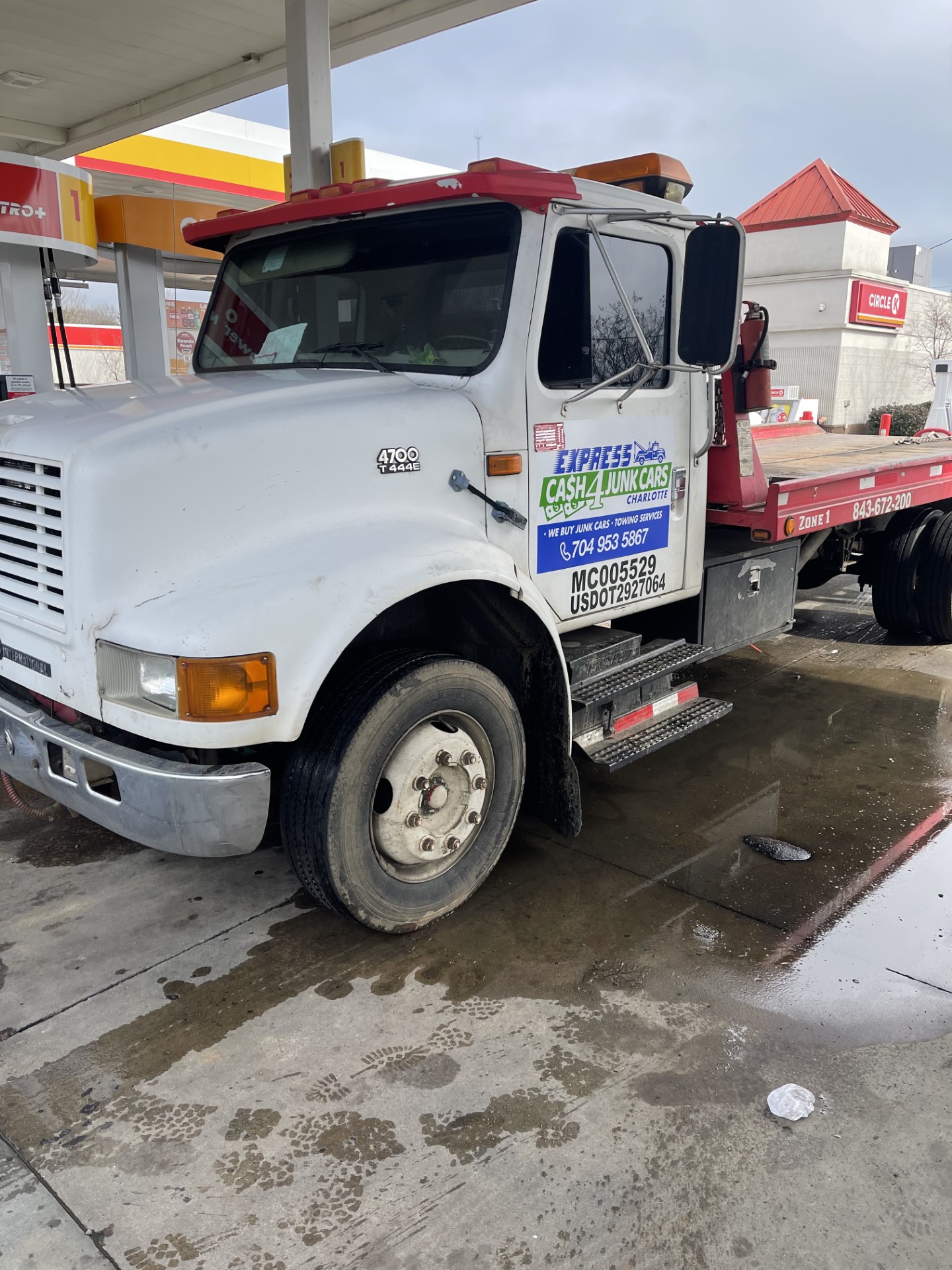
Why a seized engine isn't the end of the car's value
A seized engine is a specific mechanical failure: the rotating assembly is physically locked and cannot turn. That is different from a no-start (won't fire, but will still spin), and different from a head gasket failure (loses coolant, but still rotates). On a seized engine, a wrench on the crankshaft pulley bolt will not move. The starter clicks, draws current, and the engine refuses to budge. There is no fluid flush, no penetrating oil treatment, no warm-up trick that restores rotation once the bottom end has locked. The only mechanical paths are a long-block replacement or a full bottom-end rebuild, and both routinely exceed the vehicle's market value.
The four paths to engine seizure we see most often in Charlotte are distinct and well-known to our dispatch. Oil starvation is the most common: a worn or failed oil pump, a low oil level the driver ignored, or a sustained low-pressure condition wipes the rod and main bearings until the journals score and the assembly locks. Overheat seizure is next: a coolant loss event combined with continued driving warps cylinder bores, scuffs piston rings into the walls, and welds metal to metal. Spun rod or main bearings — usually after a high-RPM event or sustained low oil pressure — drop a connecting rod through the side of the block or lock the crank in the saddles. Hydrolock from water ingestion is the fourth: storm-crossing, deep puddle, or flooded creek bed; water enters the intake at speed, the piston can't compress it, the rod bends and the bottom end locks. Each cause produces a non-rotating engine that no realistic repair will recover.
What this page is not is the blown-engine page. A blown engine usually means the bottom end is finished, but rotation may still be possible — a holed block, a thrown rod that exited the side, a catastrophic event that destroyed the motor but did not necessarily lock it. A seized engine specifically refuses to rotate. We buy both, but the diagnostic conversation and the pickup logistics are different. On a seized car, our driver does not try to bump-start, crank, or rotate the engine on arrival — the vehicle is loaded as a non-rotating unit, often with the transmission left in neutral if it will shift, or winched onto the rollback with the drive wheels off the deck if the trans is locked too.
We run seized engine car buying pickups across the Charlotte metro every week. Most of our volume comes out of Charlotte, Concord, Gastonia, Huntersville, and Matthews — but we buy across 20+ other cities in the area too. Ready to move? Get a cash offer for your junk car or check what your car is worth on our junk car value guide.
Owners who land on this page often also need blown engine car buying, non-running car buying, head gasket car buying, car with mechanical problems, transmission failure car buying, or no-start car buying — same tow truck, same crew, same cash-on-pickup pay. If you're not sure which one actually describes your situation, start with our our Charlotte service page and we'll sort it out on the call.
How a seized engine usually shows up
Crankshaft pulley bolt will not turn with a breaker bar
The definitive seizure test. A mechanic puts a socket on the crank bolt and tries to rotate the engine by hand. A free engine rotates with moderate effort; a seized engine refuses to move under any reasonable force. Once confirmed, no top-end repair will help — the rotating assembly is mechanically locked.
Starter draws current, clicks hard, engine doesn't budge
A seized engine presents the starter with a load it cannot move. The starter clicks loudly, the lights dim or flicker as current draws, and rotation never happens. Replacing the starter accomplishes nothing because the failure is in the engine, not the starter.
Loud single bang or knock followed by permanent dead engine
A thrown rod, dropped valve, or main bearing failure typically arrives with one identifiable event — a sharp bang from under the hood, sometimes a hole punched through the block. After that event, the engine either stops immediately or runs roughly for a few seconds before locking. Restart attempts produce nothing useful.
Oil pressure light was on for weeks before failure (oil starvation)
Sustained low oil pressure scores the bearing journals and wipes the bearings until the rod and main caps lose clearance entirely. The engine may run for hundreds of miles in this state — until the moment it doesn't. Owners who 'topped off and kept driving' often describe a final highway shutdown followed by no restart.
Engine overheated to gauge max, then never restarted
Cylinder bores warp, piston rings scuff into the walls, and aluminum head-to-iron-block thermal mismatch can effectively weld the engine internally. Overheat seizures are common on Charlotte cars after a sustained climb on I-77 with a failed water pump, blown lower hose, or stuck thermostat.
Water ingested at speed (hydrolock from flooded road)
Water entering the intake at highway RPM compresses against the piston, bends one or more connecting rods, and locks the crankshaft. Storm-related hydrolock is a known Charlotte pattern after heavy rain events and creek crossings. The engine will not rotate after a hydrolock event; the rods are bent and often the crank is bent too.
Recent seized engine car buying pickups in the Charlotte area
Problem: Oil pressure light ignored 400 miles; bottom-end locked solid
Reason for selling: Rebuild quote was $4,200; car value $2,100
Outcome: $475 cash, tow truck pickup from a tight alley
Problem: Engine locked after recall stall; rotation test confirmed
Reason for selling: Done waiting for recall replacement queue
Outcome: $575 cash from a single-family driveway
Problem: Seized at 95k after GDI rod-knock progression
Reason for selling: Recall queue was 6 months out
Outcome: $625 cash from a covered carport
Problem: Sustained overheat on I-77; block cracked, locked
Reason for selling: Repair would exceed clean-title value
Outcome: $475 paid from a residential driveway
Problem: Oil pump failure, full seizure
Reason for selling: Owner refused another inline-six rebuild
Outcome: $625 cash from a fenced backyard
Problem: MDS lifter failure into rod knock into seizure
Reason for selling: Hemi lifter pattern progressed past rebuild value
Outcome: $1,025 paid, large tow truck dispatched
Problem: Bottom-end locked, oil starvation
Reason for selling: Repair exceeded vehicle's clean value
Outcome: $450 cash, free tow from a duplex driveway
Problem: QR25 oil-burn progression to seizure
Reason for selling: Known consumption issue; owner moved on
Outcome: $425 paid from an apartment parking lot
Problem: Spun rod bearing; crank locked in saddles
Reason for selling: Frame rust on top of engine failure
Outcome: $650 cash from a gravel driveway
Problem: Hydrolocked at a creek crossing; bent rods
Reason for selling: Bottom-end locked solid post-event
Outcome: $500 paid, free tow truck from a sloped driveway
Problem: Engine locked after recall stall, rotation test confirmed by mechanic
Reason for selling: 6-month recall replacement queue, owner done waiting
Outcome: $625 cash from a single-family driveway, recall claim transferred to us
Problem: MDS lifter failure progressed to rod knock and seizure
Reason for selling: Hemi lifter pattern past rebuild value
Outcome: $1,075 cash from an HOA driveway, heavy tow truck dispatched
Problem: Oil pressure light ignored, bottom-end locked solid
Reason for selling: Rebuild quote was $4,400 on a $2,100 car
Outcome: $525 cash from a tight alley pickup with winch extraction
Problem: Hydrolocked at a creek crossing during storm, bent rods
Reason for selling: Bottom-end locked solid post-event
Outcome: $550 cash from a sloped Lake Norman driveway
Problem: Bottom-end seizure after sustained towing overheat
Reason for selling: Diesel rebuild quote crossed $12,000
Outcome: $2,450 cash from a contractor's work yard, heavy tow truck dispatched
When a long-block swap costs more than the car's worth
Engine replacement is the single most expensive repair in the consumer market. A used long-block swap for a common four-cylinder runs $3,500-$5,500 installed in Charlotte; a V6 runs $5,000-$7,500; a V8 truck engine runs $6,500-$9,500. Diesels (6.7 Powerstroke, 6.6 Duramax, 6.7 Cummins) start at $9,000 and climb past $14,000 for the higher-end builds. A full rebuild costs more than a replacement and takes weeks longer. Add labor at $130-$160/hour, sensors that crack during removal, motor mounts that need to be replaced, fluids, gaskets — the out-the-door cost is consistently 30-50% above the headline parts number.
Most owners arrive at the seized-engine sale decision when the swap quote crosses the vehicle's clean-title value, which on a 10-15 year old car with normal mileage is almost always. We buy the seized vehicle as a complete unit, pay cash on the spot, and the owner uses that money toward a replacement vehicle instead of pouring it back into an aging one. The tow truck handles loading the non-rotating engine without difficulty — we don't need it to crank, roll, or spin a wheel.
There's a real difference between a local Charlotte junk car buyer and a national online vehicle buying service. National services generate the offer centrally and arrange collection through independent carriers or partner buyers, which they publish on their own sites. A local buyer prices the car itself and sends its own truck. That is a structural difference in who you deal with and who shows up; which offer is higher depends on the vehicle.
When you call Express Cash For Junk Cars Charlotte, you talk directly to the buyer making the offer — no dispatcher in another state, no script being read at you. We know the Charlotte parts market because we operate in it every day, so our offers reflect current local demand for your vehicle. If you already have another offer, bring it and we will tell you honestly whether we can do better.
How Our Offer Is Built When The Engine Won't Rotate
Seized-engine offers in our market are built around what's salvageable on the rest of the vehicle, not what the engine is worth (a seized engine is scrap-weight aluminum or iron in our salvage math). The transmission is the single biggest line item — an intact transmission on a popular platform routinely accounts for $300-$800 of the offer by itself, especially on Hondas, Toyotas, Hemi Rams, GM trucks, and most diesels. Drive axles and differentials on 4WD and AWD vehicles add another $150-$400. The catalytic converter (if still in place) adds $200-$500 depending on platform. Body panels, wheels, glass, and interior fill out the rest.
What changes the seized-engine offer most isn't the seizure cause (oil starvation vs hydrolock vs overheat seizure all produce roughly the same offer) — it's whether the seizure left the rest of the vehicle intact. A clean seizure where the engine just locked up but didn't take anything else with it is the best case. A seizure that came with a catastrophic event (rod through the block damaging adjacent components, overheat that warped the radiator and AC condenser, hydrolock from a flood that also damaged interior electronics) pays less because the secondary damage reduces salvage value on adjacent systems.
Pickup Day For A Vehicle With A Mechanically Locked Engine
Seized-engine pickup runs differently from a no-start pickup because the rotational state of the drivetrain affects how the vehicle loads. The driver does not attempt to crank, rotate, or jump-start the engine on arrival (forcing rotation on a damaged bottom end can finish the failure and risks injury). If the transmission still shifts to neutral, the vehicle rolls onto the deck normally. If the transmission is locked because the engine seizure jammed it through the torque converter (more common on automatics with severe seizures), we deck-load with the drive wheels riding on the rollback surface directly — the vehicle rides as a non-rotating unit.
Fluid leaks are more common on seized-engine vehicles than other no-start categories. A seized engine sometimes has cracked oil pan from internal pressure, leaking head gaskets from the overheat that caused the seizure, or compromised seals throughout the bottom end. The driver brings an absorbent mat for any residual leak; pickup itself takes 18-25 minutes typically because of the extra fluid containment and the rotational-state assessment.
NC Title Transfer On A Seized-Engine Vehicle
Seized-engine vehicles typically come to us with current NC title in the seller's name and clean title brand. The transfer paperwork is standard: sign the title as seller with current odometer (not 'mileage at failure'), we sign as buyer, you receive the itemized bill of sale with our company info and federal EIN, plate comes off the vehicle. The seizure event itself does not produce any title brand or affect transferability — the title clerk at NCDMV does not test or inspect the engine.
One specific situation worth noting: vehicles seized from a known recall (Hyundai/Kia Theta II being the most common in our service area) sometimes have a manufacturer 'engine replacement file' open with the recall queue. Selling to us closes your participation in the recall — once we own the vehicle, the recall claim transfers to us as the new owner and the manufacturer fulfills it (or doesn't) at our end, not yours. If you've been waiting months in the recall queue and want to exit, the sale closes that loop. Bring whatever recall correspondence you have to pickup; we factor it into our buying process at our end.
Charlotte Pickup Logistics For Seized-Engine Vehicles And Diesel Trucks
Seized-engine vehicles are heavier load profiles than typical no-start cars because the drivetrain is sometimes locked and the rotational assessment changes the loading approach. For most passenger cars and half-ton trucks, the standard tow truck handles loading with normal winch-up procedure. For three-quarter-ton and one-ton diesel trucks (F-250/350, Silverado 2500/3500, Ram 2500/3500) with seized engines, we dispatch our heavy-duty tow truck with extended winch capacity and stronger chains. Tell us on the call whether the seizure is on a passenger vehicle or a heavy truck so the right rig comes out.
Diesel-truck seizures are a specific subcategory worth flagging: Powerstroke (6.0, 6.4, 6.7), Cummins (5.9, 6.7), and Duramax (6.6 LB7/LBZ/LMM/LML/L5P) seizures all carry strong drivetrain parts demand even when the engine is finished. Pickups on these typically pay $1,000-$2,500 even with the engine completely seized because the transmission, transfer case, axles, and frame all carry serious resale value. Pickup logistics for diesel trucks in the Charlotte area extend beyond standard residential driveway loads — we routinely pick up from work-truck lots, contractor properties, and farm/rural sites.
Why Selling Beats Engine Replacement On 10-15 Year Old Vehicles
Engine replacement is the single most expensive routine repair in consumer vehicles. Used long-block swap on a common four-cylinder: $3,500-$5,500 installed in the Charlotte market. V6: $5,000-$7,500. V8 truck engine: $6,500-$9,500. Diesel: $9,000-$14,000 and up. Add labor at $130-$160/hour, sensors that crack during removal, motor mounts and engine accessories that need replacement, fluids and gaskets, and the out-the-door cost typically runs 30-50% above the headline parts number.
Most owners arrive at the seized-engine sale decision when the swap quote crosses the vehicle's clean-title value. On a 10-15 year old car with normal mileage, that's almost always the case. The cash we pay for the seized car plus the repair money you'd otherwise spend on the swap usually puts you into a meaningfully newer vehicle. The math is rarely close.
Recent Charlotte Area Vehicle Purchases
A snapshot of recent cash offers paid on pickup across the Charlotte metro.
- 2016 Chevrolet EquinoxBelmont, NC$225
- 2004 Nissan AltimaBelmont, NC$375
- 2006 Mitsubishi OutlanderDavidson, NC$600
- 2012 Jeep CherokeePineville, NC$925
- 2001 Dodge ChargerPineville, NC$275
- 2012 Nissan AltimaHarrisburg, NC$325
Offers vary by year, make, model, condition, location, and current scrap-metal pricing.
Charlotte Neighborhoods & Surrounding Communities We Serve
Local tow truck routes covering the City of Charlotte plus every major commuter community in Mecklenburg, Cabarrus, Union, Gaston, and Iredell counties. Same-day or next-morning pickup on most calls.
- University City
- Ballantyne
- SouthPark
- Steele Creek
- NoDa
- Plaza Midwood
- Mint Hill
- Matthews
- Huntersville
- Concord
- Gastonia
- Monroe
- Pineville
- Belmont
- Cornelius
- Davidson
- Harrisburg
- Indian Trail
- Kannapolis
Popular Searches
- Cash For Junk Cars Charlotte
- Cash For Cars Charlotte NC
- We Buy Junk Cars Charlotte NC
- Junk Cars For Cash Near Me
- Sell My Junk Car Charlotte
- Junk Car Buyer Charlotte
- Top Dollar For Junk Cars Charlotte
- Same Day Junk Car Pickup Charlotte
- How Much Is My Junk Car Worth
- Get A Cash Offer Today
- $500 Cash For Junk Cars
- Who Pays The Most For Junk Cars
- We Buy Junk Cars No Title
- Junk Car Removal Charlotte
- Sell Wrecked Car For Cash
- Cash For Damaged Cars
- Junkyards Near Me Charlotte
Get your offer & key destinations
Areas we serve
Learn more about: our other services
Frequently asked questions
Have a car with a seized engine?
Get a real cash offer in minutes. Free towing. Same-day pickup. Paid the moment we arrive.
Earn Money Referring Vehicle Sellers
Mechanics, body shops, tow companies, dealerships, tire shops, transmission shops, and salvage yards can earn referral payments when customers sell their vehicles through Express Cash For Junk Cars Charlotte.
- Local Charlotte buyer
- Fast response times
- Same-day vehicle pickup available
- Direct communication
- Referral payments available
A professional, local partnership program — not affiliate marketing. Apply in 60 seconds.
Become A Partner Call 704-953-5867