
- Since 2016Local Charlotte buyer since 2016Local Charlotte buyer since 2016
- Any conditionWe Buy Cars In Any ConditionWe Buy Cars In Any Condition
- 1,000s boughtThousands of Vehicles PurchasedThousands of Vehicles Purchased
- Cash on pickupCash Paid On PickupCash Paid On Pickup
- Free towingFree Same-Day TowingFree Same-Day Towing
- Charlotte metroCharlotte, Mecklenburg & Surrounding AreasCharlotte, Mecklenburg & Surrounding Areas
Cash For Flood Damaged Cars In Charlotte
We buy flood-damaged cars in the Charlotte area, including total losses and partial submersion. We coordinate with insurance adjusters and tow yards when needed.
Get your free cash offer
- Any depth of water intrusion — door sill to dashboard to total submersion
- Hydrolocked engine, mold, corroded electronics — none of it changes the sale
- NC flood title or salvage title — we know the paperwork
- Free tow truck from driveway, garage, or insurance tow yard
What happens after you submit
- 1We price your exact vehicle
Year, make, model, condition and title status are checked against current scrap and salvage numbers.
- 2A local buyer calls you
You get a real number from a Charlotte dispatcher — not an automated range.
- 3We schedule the tow
Towing is included. Pickups run Monday–Saturday; no Sunday pickups.
- 4You get paid at the curb
Cash, Zelle, or Apple Pay when the paperwork is signed.
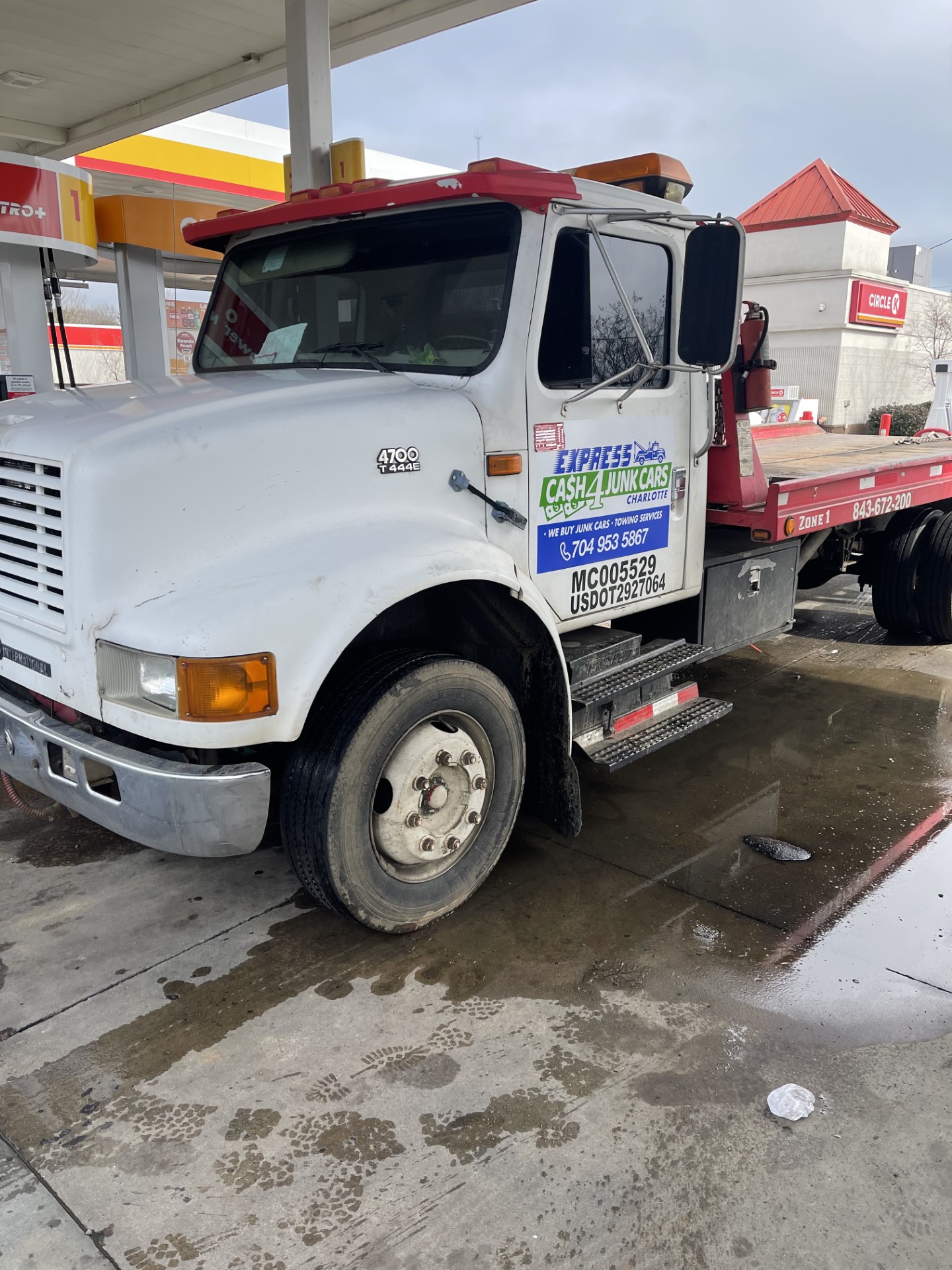
Problems that often show up after water exposure
Flood damage to a vehicle is fundamentally a water-and-electronics problem, not a body-and-paint problem. The visible damage (wet carpet, mildew smell, mud on the floor mats) is the easy part. The expensive part is what water did to the wiring harnesses, the body control module under the driver's seat, the airbag SRS module under the center console, the seat-position electronics, the door modules, the BCM, the PCM, the transmission control module if it sits low in the engine bay, and every connector water passed through on its way to those modules. Charlotte sees flood vehicles in distinct event clusters — hurricane systems pushing inland through the Carolinas, Catawba and Yadkin river-system flash floods, low-lying neighborhood and apartment-complex submersion during heavy storms, basement-garage flooding from sustained rain — and each cluster produces a wave of insurance total losses, salvage titles, and owner decisions about what to do with the vehicle after the claim closes.
The North Carolina flood-title and salvage-title framework matters for the sale. If the insurance company declared the vehicle a total loss and you retained the salvage at settlement, the title was branded by NCDMV — typically as 'Salvage' for flood-related total losses, or as 'Flood Vehicle' specifically in some cases under NC G.S. 20-71.4. A flood-branded title cannot be retitled clean and the vehicle cannot be re-registered for road use in NC without a salvage rebuild inspection and a rebuilt-title application (which most flood vehicles cannot pass because of the electronic damage). If the insurance company kept the salvage, the title transferred to them and the vehicle moved to an insurance auction queue — we sometimes buy at that stage too, with auction authorization. If you didn't file an insurance claim (some owners with older vehicles and high deductibles don't), the title may still be clean in your name, and we buy directly from you with a normal title transfer.
What separates this page from the broader damaged-car-buyer page is the failure mode. Collision damage, hail damage, fire damage, frame damage — those are mechanical or structural events with localized failure zones. Flood damage is systemic electronic and corrosion damage that touches every system water reached, and the long-term outcome of any partially-dried flood vehicle is the same: intermittent electrical failures that escalate over the following 6-24 months as corrosion spreads through connector pins, ground straps, and module circuit boards. Insurance companies know this, which is why flood total-loss declarations are so common; the repair cost to make a flood vehicle reliably drivable usually exceeds 100% of the pre-flood ACV before the airbag and module replacement labor even starts.
We run flood-damaged car buying pickups across the Charlotte metro every week. Most of our volume comes out of Charlotte, Concord, Gastonia, Huntersville, and Matthews — but we buy across 20+ other cities in the area too. Ready to move? Get a cash offer for your junk car or check what your car is worth on our junk car value guide.
Owners who land on this page often also need fire-damaged car buying, wrecked car buying, damaged car buying, junk car removal, failed nc inspection car buying, or missing catalytic converter car buying — same tow truck, same crew, same cash-on-pickup pay. If you're not sure which one actually describes your situation, start with our our Charlotte service page and we'll sort it out on the call.
Flood-damage situations we see across the Carolinas
Water reached the seat tracks or higher
Water at seat-track height damages floor wiring harnesses, seat heater and position modules, airbag side modules under the seats, the body control module if it's seat-mounted, and the carpet/padding under the seats. The smell alone makes the interior unrecoverable for most owners. Insurance companies routinely total cars at this water level.
Water reached the dashboard
Dash-level water destroys the instrument cluster, infotainment, HVAC controls, BCM, PCM if dash-mounted, every dash module, and the wiring behind the dash. Repair cost crosses 100% of pre-flood ACV easily. Total-loss declaration is near-automatic at this submersion level.
Engine ingested water while running (hydrolock)
If the engine was running when water entered the intake, hydrolock is the result: connecting rods bend on the incompressible water charge, cylinder walls scuff, the bottom end may seize. Even if the engine restarts after drying, internal damage typically appears as knock, oil consumption, or sudden failure within months.
Vehicle has been sitting wet for weeks
Cars left wet without prompt drying grow significant mold throughout the interior, corrode wiring and connectors progressively, and rust internal drivetrain components. Even minor flood depth becomes major damage with sustained exposure. Our pickup queue regularly includes 'we left it sitting and forgot about it' flood vehicles.
Insurance declared the vehicle a flood total loss
Flood total-loss declarations are common — airbag, electronics, and interior replacement combined usually exceed pre-flood ACV. We buy from owners who retained the salvage at settlement, and we coordinate with insurance auctions and tow yards holding flood vehicles that the insurer is liquidating.
Engine cranks but won't start after the water receded
Common pattern after partial flooding. The car may have run for a few minutes during or right after the flood, then electronics failed as water spread, sensors corroded, and the no-start became permanent. The cumulative damage is what makes the repair uneconomic, not the single failure that finally killed it.
Recent flood-damaged car buying pickups in the Charlotte area
Problem: Catawba flooding, water above dashboard, insurance totaled
Reason for selling: Owner retained salvage at settlement
Outcome: $400 cash from a residential driveway, NC salvage title transferred at curb
Problem: Basement garage flooding 18 inches, electronics ruined
Reason for selling: Insurance settled, owner kept the vehicle
Outcome: $475 paid from an underground garage, free tow truck
Problem: Storm flooding to door sills, mold growing
Reason for selling: Owner coordinated with insurance tow yard
Outcome: $650 cash, tow yard pickup with insurance auth
Problem: Hurricane runoff, hydrolocked engine
Reason for selling: Insurance total loss, salvage retained
Outcome: $525 paid from a single-family driveway
Problem: Creek flooding, deep submersion, frame and electronics damaged
Reason for selling: Owner decided against rebuild
Outcome: $500 cash from a gravel driveway
Problem: Apartment parking lot flash flood, water to dash
Reason for selling: NC salvage title issued by insurance
Outcome: $425 paid from an apartment parking lot
Problem: Driveway flooding during storm, owner didn't file claim
Reason for selling: Clean title in owner's name, no insurance involvement
Outcome: $375 cash from a residential driveway
Problem: Underground garage flooded, electronics extensively damaged
Reason for selling: Insurance salvage queue pickup
Outcome: $425 paid from a salvage lot in NE Charlotte
Problem: Lake Norman storm runoff, water to seats
Reason for selling: Insurance totaled the vehicle, salvage retained
Outcome: $500 cash from a Lake Norman home
Problem: Flash flood on commute, hydrolock plus interior loss
Reason for selling: Owner kept salvage at total-loss settlement
Outcome: $525 paid from an HOA driveway
Problem: Flash flood reached above floor pan, wet carpets, multiple electrical gremlins after drying out
Reason for selling: Insurance didn't total it but the post-flood electrical issues never resolved
Outcome: $2,150 cash, picked up from an apartment lot off South Boulevard the same week
Problem: Creek flood reached interior, water line at seat bottom, dashboard electronics intermittent
Reason for selling: Insurance totaled with owner retention; sold to us instead of the salvage auction
Outcome: $1,850 cash, picked up the same day from a single-family driveway off Eastway Drive
Problem: Garage flood from busted water heater, water reached above floor for 2 days before discovery
Reason for selling: Homeowner's claim paid; owner kept the Civic to sell salvage
Outcome: $1,075 cash, free tow truck pickup from a residential garage off South Tryon
Problem: Lake Norman boat-ramp accident; SUV went into lake to bumper depth, recovered after 1 hour
Reason for selling: Insurance totaled; owner kept the salvage
Outcome: $1,650 cash, picked up from a lakefront driveway off Brawley School Road the next morning
Problem: Apartment-lot flood from a heavy thunderstorm; water above floor pan, then started having electrical issues a month later
Reason for selling: Owner couldn't get insurance to acknowledge the delayed-onset problems
Outcome: $1,475 cash, picked up from an apartment complex off Concord Mills Blvd the same week
Why flood-damaged cars rarely make financial sense to repair
Repairing a meaningfully flood-damaged vehicle rarely makes economic sense. Wiring harness replacement: $1,500-$5,000 for affected sections (full harness on most modern vehicles runs higher because of routing complexity and connector count). Airbag SRS module and crash sensors: $800-$2,500. Interior replacement (seats, carpet, padding, headliner): $1,500-$4,000 for full restoration. PCM, BCM, TCM, and infotainment modules: $500-$2,000 per affected module. Hydrolock engine repair: $3,000-$8,000 depending on damage extent. When two or three of these stack — which they always do on real flood damage because water doesn't damage one system in isolation — the combined quote exceeds the vehicle's pre-flood ACV before any work starts.
Selling the flood-damaged car closes every line item at once. The free tow truck arrives at the scheduled window, the cash is counted at the curb, and the flood vehicle leaves your property the same day. We coordinate with insurance salvage queues and tow yards when the vehicle isn't on your property. NC flood-branded or salvage-branded titles are handled as part of the transaction; we know which paperwork accompanies which title brand.
There's a real difference between a local Charlotte junk car buyer and a national online vehicle buying service. National services generate the offer centrally and arrange collection through independent carriers or partner buyers, which they publish on their own sites. A local buyer prices the car itself and sends its own truck. That is a structural difference in who you deal with and who shows up; which offer is higher depends on the vehicle.
When you call Express Cash For Junk Cars Charlotte, you talk directly to the buyer making the offer — no dispatcher in another state, no script being read at you. We know the Charlotte parts market because we operate in it every day, so our offers reflect current local demand for your vehicle. If you already have another offer, bring it and we will tell you honestly whether we can do better.
How Our Flood-Damage Offer Is Calculated By Water Line And Submersion Time
Flood-damage offer math is two-dimensional: how high the water reached, and how long the vehicle sat in or after the water. The water-line dimension is the easier one. Floor-pan only (water below the seat tracks) — interior wet, carpet ruined, possibly some under-seat electronics affected — mild deduction. Seat-track level — most under-seat modules damaged (BCM if seat-mounted, seat-position modules, sometimes airbag SRS side modules), heavier deduction. Dashboard level — instrument cluster, infotainment, HVAC controls, BCM, PCM if dash-mounted, every dash module, the wiring behind the dash — vehicle drops to parts-and-metal value with a heavy electronics deduction. Above-the-dash submersion — total loss in offer terms, scrap plus what survived intact.
The time-in-water dimension compounds the damage non-linearly. A vehicle that sat 4 hours in water and was towed and dried within 24 hours retains substantially more component value than one that sat 4 days submerged or 4 weeks wet without drying. Mold, corrosion through connector pins, rust on internal drivetrain components, and progressive electronic failures all accelerate with sustained wet exposure. Insurance companies total flood vehicles aggressively for exactly this reason.
Pickup Day For A Flood-Damaged Or Hydrolocked Vehicle
Flood-vehicle pickup has two access patterns. The first is owner-property pickup where the vehicle has been sitting since the water receded — driveway, garage, basement garage, apartment parking lot. The driver assesses whether the vehicle still rolls (sometimes wheels lock from internal rust if it sat wet for weeks); if not, we load with the chassis riding directly on the deck. Heavy mold or strong odor isn't a problem from our side — we don't enter the cabin for the pickup itself, the title sign-over happens at the curb on the hood. The second pattern is insurance-tow-yard pickup (Copart, IAA, local impound) where the insurer is liquidating retained salvage. The yard release paperwork and lot number drive the timing on that side.
Hydrolock pickups specifically require one extra consideration: if the engine ingested water while running, the connecting rods are likely bent and the engine may be effectively seized. The driver does not attempt to crank the engine on arrival (that can finish a partially-failed bottom end). The vehicle loads as a non-rotating unit if needed; the tow truck handles it either way.
NC Flood Title And Salvage Title Paperwork At Sale
Three NC title scenarios cover almost every flood vehicle we buy. Scenario A: insurance paid total loss and you accepted owner-retention. You hold either an NC 'Salvage' branded title under G.S. 20-71.3 or specifically a 'Flood Vehicle' branded title under G.S. 20-71.4 (some insurer reporting paths produce the more specific brand). Either brand transfers to us at the curb with the original title and your photo ID. Scenario B: insurance paid total loss and kept the salvage. The insurer owns the vehicle and is liquidating through Copart/IAA — we buy through that auction channel, not from you. Scenario C: no insurance claim filed. Title stays clean in your name; we transfer with normal NC paperwork and the flood disclosure noted on the bill of sale under G.S. 20-71.4.
The 'Flood Vehicle' brand specifically stays on the title permanently and cannot be cleared. The vehicle cannot be retitled clean in NC and cannot pass salvage rebuild inspection in most cases because of the electronic damage profile. That has zero effect on our purchase — we're not registering the car for road use — but it does mean that selling to us is essentially the final disposition of the vehicle's NC title.
Charlotte Flood-Vehicle Pickup Logistics And Storm-Event Considerations
Charlotte flood-vehicle volume runs in event clusters rather than steady weekly flow. The dominant patterns: hurricane systems pushing inland through the Carolinas (we add capacity for 1-3 weeks after major systems), Catawba and Yadkin river-system flash floods affecting riverside neighborhoods, low-lying neighborhood and apartment-complex flash flooding from sustained heavy rain (Mount Holly, parts of Belmont, parts of west Charlotte), and basement-garage flooding in older urban properties (Plaza Midwood, Dilworth, parts of NoDa). Each cluster produces a different mix of insurance-tow-yard vs owner-property pickups.
During post-event high-volume weeks, our normal same-day or next-day pickup timeline extends to 3-7 days. We prioritize tow-yard pickups (because yard storage fees accumulate against the owner or insurer daily) and HOA-deadline pickups. Standard owner-property pickups in quieter weeks return to same-day or next-morning scheduling.
How Flood Damage Actually Works And Why It's Hard To Repair
Flood damage is uniquely insidious among vehicle damage types because the visible signs fade but the underlying damage compounds over time. Water that's been in the vehicle for hours leaves silt, sediment, and contaminants in every cavity, wire connector, and bearing. Even after thorough drying, corrosion continues for years inside connectors, sensors, and metal components that weren't designed to ever be wet. Electrical problems show up months or years after the flood — random misfires, instrument cluster failures, ABS faults, transmission electronic issues — and chasing them is usually unsuccessful because the root cause is widespread corrosion rather than a single failed component.
Salt water is worse than fresh water by an order of magnitude. Fresh-water flooding (creek flooding, rainwater pooling, sewer backup) gives the car a chance — drying out, cleaning, and addressing specific electrical damage can sometimes restore a fresh-water-flooded vehicle to functional use. Salt-water flooding (hurricane storm surge, tidal flooding) essentially condemns the car. Charlotte is far enough inland that most local flooding is fresh-water, but vehicles imported from coastal areas (or from major hurricane events anywhere on the East Coast) sometimes show up here with hidden salt-water damage.
Charlotte sees flood damage from several recurring sources: heavy rain events that flood low-lying neighborhoods near Sugar Creek, McAlpine Creek, and Catawba River tributaries; flash flooding on streets that don't drain quickly (sections of South Tryon, Independence Blvd, parts of East Charlotte); apartment-complex parking lots in low areas; and occasional severe storms that overwhelm even normally-good drainage. Vehicles parked in basements or low-elevation garages during flash floods are common claims.
The hardest cases to evaluate are partial-flood vehicles where the water came up to a specific level and then receded. These cars often "look fine" and even start and drive, but the buried electrical damage is there waiting. We treat the visible water line as a strong indicator: above the floorpan = severe; above the seats = total. Sellers occasionally don't know how high the water came (insurance described it, the car was moved before they saw it); we adjust based on the visible damage signature.
One specific note for Charlotte sellers: vehicles flood-damaged in major hurricane events elsewhere (e.g., Florida hurricane vehicles) are sometimes laundered through the Carolinas via auction-rebuilder pipelines, and end up sold to unsuspecting buyers as "rebuilt." If you bought a used car and later discovered flood history, we'll buy it — and pay fairly — even though you didn't know. Bring whatever documentation you have.
What flood damage doesn't kill: the engine block, transmission case (with fluid changes), most body panels, glass, exterior trim, wheels, and tires if they weren't submerged long. These retain parts and scrap value, which is where most of our offer on a flood vehicle comes from.
Recent Charlotte Area Vehicle Purchases
A snapshot of recent cash offers paid on pickup across the Charlotte metro.
- 2002 Subaru LegacyMount Holly, NC$475
- 2014 Buick CenturyMount Holly, NC$525
- 2000 Toyota RAV4Belmont, NC$600
- 2019 Buick EnclaveDavidson, NC$950
- 2000 Chrysler 300Davidson, NC$375
- 2020 Mercedes C-ClassPineville, NC$425
Offers vary by year, make, model, condition, location, and current scrap-metal pricing.
Charlotte Neighborhoods & Surrounding Communities We Serve
Local tow truck routes covering the City of Charlotte plus every major commuter community in Mecklenburg, Cabarrus, Union, Gaston, and Iredell counties. Same-day or next-morning pickup on most calls.
- University City
- Ballantyne
- SouthPark
- Steele Creek
- NoDa
- Plaza Midwood
- Mint Hill
- Matthews
- Huntersville
- Concord
- Gastonia
- Monroe
- Pineville
- Belmont
- Cornelius
- Davidson
- Harrisburg
- Indian Trail
- Kannapolis
Popular Searches
- Cash For Junk Cars Charlotte
- Cash For Cars Charlotte NC
- We Buy Junk Cars Charlotte NC
- Junk Cars For Cash Near Me
- Sell My Junk Car Charlotte
- Junk Car Buyer Charlotte
- Top Dollar For Junk Cars Charlotte
- Same Day Junk Car Pickup Charlotte
- How Much Is My Junk Car Worth
- Get A Cash Offer Today
- $500 Cash For Junk Cars
- Who Pays The Most For Junk Cars
- We Buy Junk Cars No Title
- Junk Car Removal Charlotte
- Sell Wrecked Car For Cash
- Cash For Damaged Cars
- Junkyards Near Me Charlotte
Get your offer & key destinations
We also buy these conditions
Areas we serve
Learn more about: our other services
Frequently asked questions
Looking to sell a flood damaged vehicle?
Get a real cash offer in minutes. Free towing. Same-day pickup. Paid the moment we arrive.
Earn Money Referring Vehicle Sellers
Mechanics, body shops, tow companies, dealerships, tire shops, transmission shops, and salvage yards can earn referral payments when customers sell their vehicles through Express Cash For Junk Cars Charlotte.
- Local Charlotte buyer
- Fast response times
- Same-day vehicle pickup available
- Direct communication
- Referral payments available
A professional, local partnership program — not affiliate marketing. Apply in 60 seconds.
Become A Partner Call 704-953-5867