
What Happens To Your Junk Car After You Sell It
Our editorial team is made up of the same local buyers, dispatchers, and title specialists who handle Charlotte-area junk vehicle purchases every day. Every guide is written from real transaction experience and current North Carolina DMV requirements.
Once the tow truck pulls out of your driveway with the keys and a stack of cash on your kitchen counter, most sellers never think about the car again. But the actual life of that vehicle after the sale is a surprisingly long process — usually 2 to 18 months from your driveway to becoming raw material for new construction or new vehicles.
This article walks through what physically happens to a Charlotte junk car after sale, who handles each step, and where the parts and metal actually end up. It's a useful read both for curiosity and as a reality check on why scrap prices fluctuate the way they do.
First stop: triage at the buyer's yard
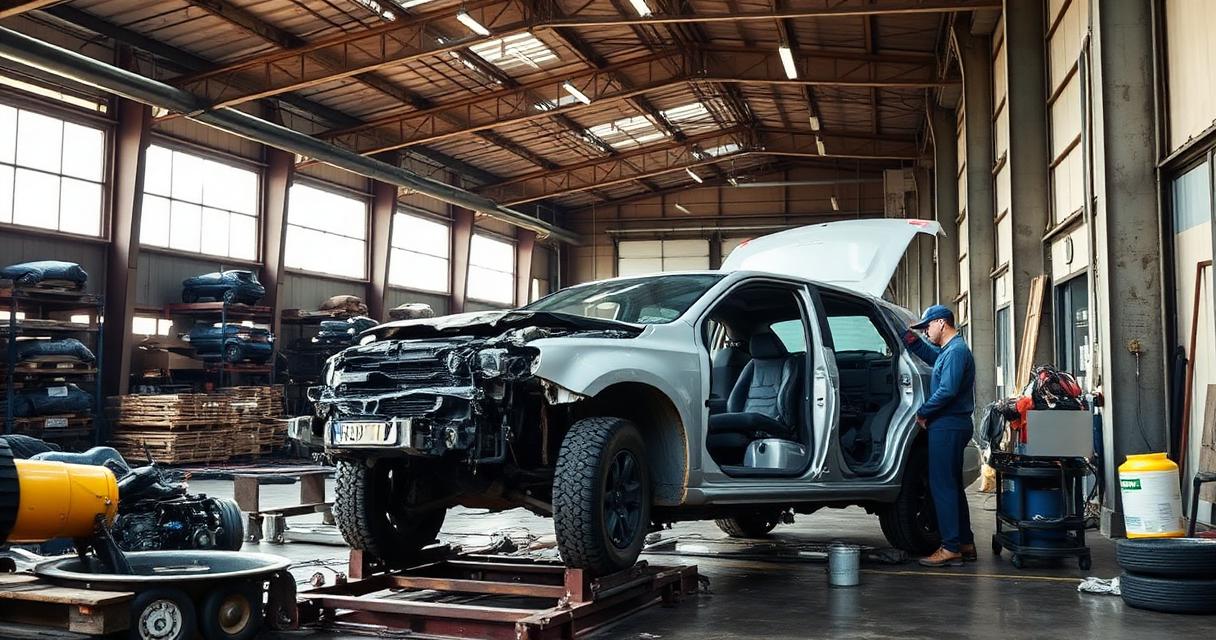
When your car arrives at the buyer's lot (often the same day it leaves your driveway), the first thing that happens is a walk-around triage. The buyer or their yard manager decides whether the car is a parts car, a scrap car, or a possible resale candidate.
If it's a parts car, it goes onto the rack — usually for 3 to 12 months — and pieces come off over time as wholesalers, body shops, and walk-in customers buy them. A clean 2014 Camry might donate its hood to a Greensboro body shop, its transmission to a Charlotte mechanic, its airbags to a wholesaler in Atlanta, and its catalytic converter to a Carolina recycler. Each part has its own buyer.
If it's pure scrap, the triage is faster: cat off, battery out, wheels off, fluids drained, and into the crush queue. This typically happens within 1–2 weeks of arrival.
Fluid drainage and de-pollution (required by EPA)
Before any car can be crushed in the U.S., it has to be "de-polluted" — a process regulated by the EPA and required by every state including North Carolina. This means draining and capturing motor oil, transmission fluid, coolant, gasoline, brake fluid, power steering fluid, washer fluid, and refrigerant from the AC system.
Refrigerant is recovered with a vacuum machine and either reused or sent to a certified destruction facility. Engine fluids are typically resold as fuel for industrial burners or sent to a re-refining facility. Gasoline is either used in the yard's own equipment or sold to commercial users.
The mercury switches in older trunk lights and hood lights are removed and sent to a national mercury recovery program. Lead-acid batteries go to a battery recycler — they're almost 100% recyclable and Charlotte yards typically get $8 to $18 per battery.
The crusher and the shredder
Once stripped, the car body goes to a crusher — a hydraulic press that flattens the vehicle to about 18 inches thick. A car that left your driveway as a 6,000-cubic-foot object is now a 50-cubic-foot pancake. The crushed body sits at the yard or at a metal processor's lot until there's enough volume to ship to a shredder.
Most Charlotte-area cars eventually end up at one of the regional auto shredders — large facilities in Salisbury, Statesville, Rock Hill, or further north toward Greensboro. The shredder rips the car into fist-sized pieces in about 60 seconds. Magnets pull out the ferrous steel; an eddy current separator pulls out the non-ferrous metals (aluminum, copper, zinc); the remaining "fluff" (plastic, foam, glass dust) is landfilled or, increasingly, processed for further recovery.
The clean shredded steel ends up at Nucor Charlotte or another regional mini-mill, where it's melted in an electric arc furnace and cast into rebar, structural beams, or coiled sheet steel.
Where the metal goes from there
A surprising amount of the steel that started as your junk car comes back into the same economy you live in. Nucor Charlotte is one of the largest rebar producers in the Southeast — that rebar shows up in highway projects, parking decks, and high-rise foundations across the Carolinas. Some of it goes into structural beams for warehouses and commercial buildings.
A smaller share of the steel goes back into automotive manufacturing. Modern cars are built with roughly 25% recycled steel content, and that content comes primarily from the kind of scrap stream your old car just joined.
Aluminum from your car wheels and any aluminum body panels often ends up in beverage cans (the fastest-recycling product in the U.S., usually back on shelves within 60 days) or in new wheels and engine blocks. Copper from your wiring goes to electrical wire production. Even the carpet fibers and foam are increasingly being recovered for use as fuel pellets at cement kilns.
The full cycle — from your driveway to a new piece of rebar — typically takes 4 to 9 months. Curious what your specific car is worth at the start of that cycle?
Get an offer or check our
Charlotte junk car value guide.
Get a cash offer on your car today
Same-day pickup across Charlotte and the surrounding metro. Cash paid on the spot, free towing included.
Related pages
- Related service: Service: junk car removal
- Related city: Cash for junk cars in charlotte
Frequently asked questions
Popular vehicle guides
Model-specific pages with real Charlotte purchase examples and current values.