
Junk Car vs. Scrap Car: What's Actually The Difference?
Our editorial team is made up of the same local buyers, dispatchers, and title specialists who handle Charlotte-area junk vehicle purchases every day. Every guide is written from real transaction experience and current North Carolina DMV requirements.
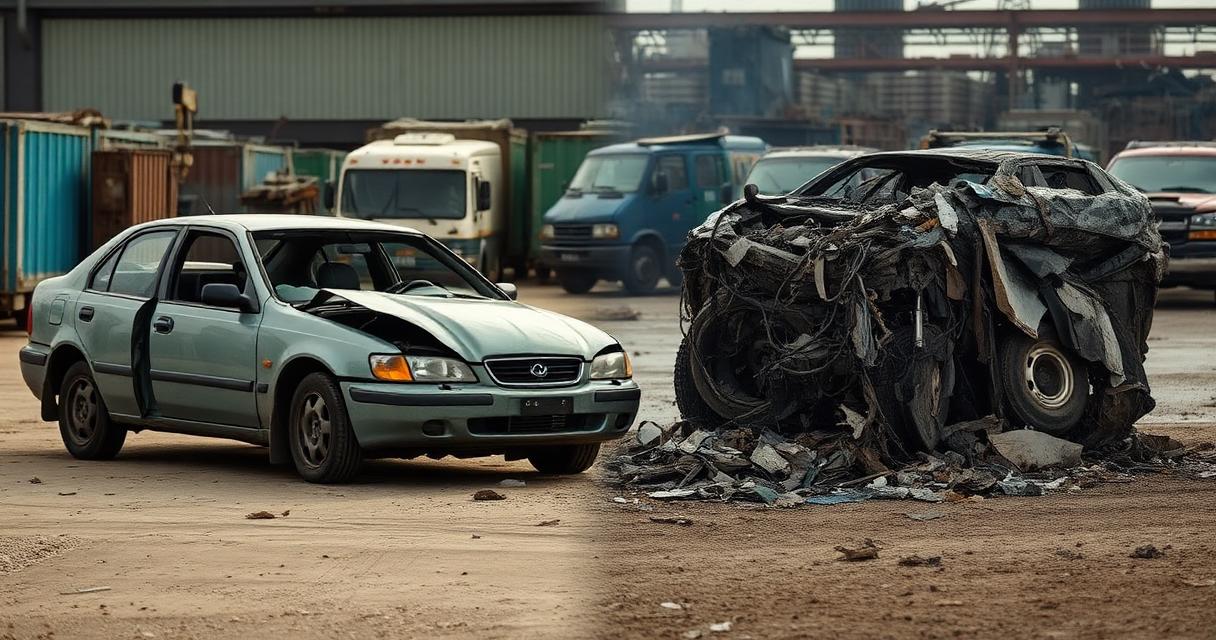
These two terms get used interchangeably in everyday conversation, but to a buyer they mean completely different things — and they get priced completely differently. A "junk car" can be a car that just looks rough but still has value as parts or as a runner. A "scrap car" is at the end of its life and is being priced purely by weight and metal content.
Knowing which category your vehicle actually falls into changes the offer you should expect and changes who the right buyer is. This guide walks through the practical difference, how Charlotte buyers categorize cars, and how to tell where yours falls.
The real definitions buyers use
In the industry, a junk car is any vehicle that's no longer worth its repair cost to keep on the road, but might still have value to someone for parts, restoration, or resale at a lower price point. A 2010 Camry with 240,000 miles and a blown transmission is a junk car — it's not worth fixing, but plenty of parts on it are still good.
A scrap car is a vehicle whose only remaining value is its raw material — the steel, aluminum, copper, and precious metals in the catalytic converter. A 1992 Lumina with a rotted floor, no engine, and surface rust everywhere is a scrap car. There's nothing on it worth pulling for parts; it's going straight to the crusher.
Most cars sit somewhere on a spectrum between the two. The dollar difference between a parts-value quote and a pure-scrap quote on the same car is typically $200 to $1,500, which is why categorization matters.
How a Charlotte buyer decides which one yours is
Three factors do most of the work: age, drivability, and body condition. Cars under about 15 years old with intact bodies almost always have parts value, even if they don't run. Cars over about 25 years old with surface rust and stripped interiors are almost always scrap-only. The middle ground (15–25 years old) depends heavily on make and how popular the car is in the parts market.
Honda, Toyota, and certain Ford and Chevy models hold parts value much longer than European cars or low-volume models. A 2003 Civic with no engine is still a parts car in 2026. A 2003 Volkswagen Passat with the same situation is closer to scrap because the parts market for it has thinned out.
What the buyer looks at on arrival: is the body straight? Is the interior intact? Is the drivetrain still there even if it doesn't run? Are the wheels and tires usable? If yes to most of those, they're pricing as junk (with parts value). If no to most, they're pricing as scrap (by weight).
What each category typically pays in Charlotte (2026)
Junk car (has parts value): $400 to $2,000 for typical passenger cars, $600 to $3,000 for pickups and SUVs. Late-model wrecks with body damage but good drivetrains can clear $5,000 or more.
Scrap car (weight only): $200 to $600 for passenger cars, $400 to $1,000 for pickups and SUVs. These numbers track per-ton scrap steel rates more closely and move week to week.
Same vehicle, scrap vs. junk pricing example: a 2008 Honda Accord with a clean body, intact interior, blown engine, and OEM cat would typically quote around $750 from a parts-focused buyer and around $400 from a pure scrap yard. Same physical car, different downstream economics.
Which one do you actually have?
Quick test: walk around your car. If the body panels are mostly straight, the interior is reasonably intact, and either the engine runs or the rest of the drivetrain is undamaged — you have a junk car with parts value and you should be quoting parts buyers, not just scrap yards.
If the body is rusted through in multiple places, the interior has been stripped or destroyed by weather, panels are missing, and the drivetrain is gone or destroyed — you have a scrap car and you're shopping for the best per-pound number.
If you're not sure, get one quote from a parts-focused junk car buyer and one quote from a strict scrap yard. The dollar difference will tell you which category the buyers are placing your vehicle in. We quote both categories and pick whichever is higher for you on every Charlotte call — request a
real cash offer or read more in our
junk car value guide.
Get a cash offer on your car today
Same-day pickup across Charlotte and the surrounding metro. Cash paid on the spot, free towing included.
Related pages
- Related service: Service: scrap car buyer charlotte
- Related city: Cash for junk cars in charlotte
Frequently asked questions
Popular vehicle guides
Model-specific pages with real Charlotte purchase examples and current values.